
Indoor gym turf installation in Pleasanton
Hacienda Business Park suites, Stoneridge-area studios and Main Street second floors share one problem: a floor that was never meant to be trained on, sitting above or beside somebody else's lease. We fit gym turf that takes the impact and keeps it out of the neighbouring suite.
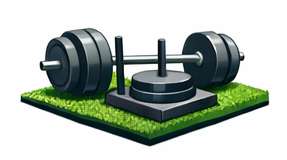
Indoor gym turf for Pleasanton spaces
The four kinds of room we get called to in Pleasanton, and what each one needs solving.
Hacienda Business Park suites
Corporate wellness rooms and tenant gyms in office suites, where the floor has to stay quiet for the tenants below and reversible for the landlord above.
Boutique studios off Main Street
Small-footprint studios in older downtown buildings - turf laid over timber or slab with a pad chosen as much for noise transfer as for knees.
Youth and school athletic rooms
Indoor training rooms for school-age athletes, built around agility lanes and marked zones a coach can actually run a session on rather than an open rectangle.
Home and garage gyms
Garage conversions across Pleasanton's older ranch neighbourhoods, where the slab needs moisture-checking before anything gets bonded to it.
The pad is the part that keeps the peace
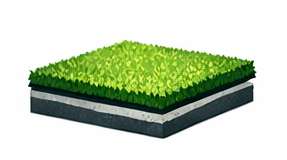
In a shared building, what your neighbours hear is impact travelling through structure. The shock-absorbing underlayment beneath the turf is what stops a dropped dumbbell being a downstairs problem.
- Pad thickness matched to the load and to the building
- Heavier build-up under drop platforms and racks
- Turf finished so the whole floor still reads level
What Pleasanton clients tell us matters
Different city, different constraints - Pleasanton jobs are usually about the building as much as the training.
The lease has to survive it
Business-park landlords approve floors that come back up cleanly. Turf bonded over the existing slab does; a poured system does not, and that is usually the deciding factor.
Noise transfer decides the pad
A ground-floor unit with nobody underneath and a second-floor Main Street studio are not the same job. The pad specification changes between them, and it should.
It has to look like a studio, not a warehouse
Turf colour, lane colour and an inlaid logo are all choosable. Pleasanton studios tend to want the floor to be part of the brand, so we cut the branding in rather than sticking it on.
Access is through somebody else's building
Rolls, pad and grinders come in through shared lobbies and lifts on the building's schedule. We plan delivery and cutting around those hours rather than discovering them on day one.
Turf floors, zoning and branding
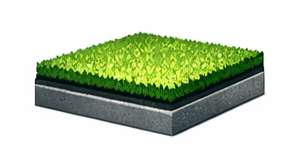
Installed surfaces from the O'Neill's galleries - shock-absorbing floors, multi-use zoning and inlaid branding.


From walkthrough to first session
The order of work does not change much. What changes in Pleasanton is how much of it happens around the building.
Walk the suite
We measure, check the subfloor, and in a shared building find out what the landlord and the tenants below need to agree to before anything is ordered.
Spec the pad, then the turf
Pad first, because that is what solves impact and noise transfer. Then pile height, colour, lane markings and any inlaid logo.
Install around the building
Delivery, grinding and cutting scheduled to the building's hours, with dust extraction on the grinder - a shared lobby does not forgive the alternative.
Snag and hand over
Thresholds cut in, seams checked, floor groomed, and a short handover on keeping it - which is mostly brushing in the right direction.
Zoned, not patched
A Pleasanton studio usually needs strength, class and agility space in one room. Zoning the pad under continuous turf gets you all three without the floor turning into a set of rectangles that never quite line up.
What you get on a Pleasanton job
A crew from here
Our owner grew up in Pleasanton and the yard is ten minutes away in Livermore, so site visits and snags do not need scheduling weeks out.
Licensed for synthetic surfacing
California contractors licence 1059264 covers C-61/D12 synthetic products alongside C-27 landscaping and C-8 concrete.
A floor specified for your building
Pad, seam layout and adhesive chosen for your subfloor and your neighbours, not taken from one default build-up.
Branding cut in, not stuck on
Custom turf colours, lane markings and inlaid logos are part of the install rather than a vinyl afterthought that peels.
Pleasanton gym turf questions
Will my landlord allow this in a Hacienda Business Park suite?
Usually yes, and it is the normal case for us. Turf bonded over the existing slab is a tenant improvement that lifts at end of term. Bring us in early and we will specify it so the reinstatement clause stays straightforward.
I am on the second floor downtown. Will people below hear it?
They will hear less, and the pad is why. Impact noise travels through structure, so the shock-absorbing underlayment beneath the turf is what we choose first in a stacked building. It is not soundproofing, but it changes the job considerably.
Can I have my studio colours in the floor?
Yes. Turf comes in custom colours, and lane lines, sport zones and a logo can be cut in as inserts. Because they are inlaid rather than painted, they last as long as the floor does.
Can you lay turf over an old timber floor?
Often, if it is sound, flat and dry. Timber needs checking for movement and deflection first - an old Main Street floor sometimes needs levelling before it is worth putting a good surface on it.
How disruptive is the install itself?
Grinding the slab is the noisy, dusty part and it is one stage. We run extraction on the grinder and schedule the loud work to suit the building. Most studio-sized rooms are finished in a few days.
Do you take the small home-gym jobs too?
Yes. A Pleasanton garage conversion gets the same turf, pad and moisture check as a commercial floor. It is a smaller version of the same job, not a different product.
Same trade, two decades on
Pavers, artificial turf and the ground preparation underneath both have been the business since 2005. Indoor gym turf is that same surface-and-substrate work, brought inside.
Talk to us about your Pleasanton space
Tell us the building, the floor and what gets done on it. We will tell you what it needs - and what it does not.
Pavers and Turf by O'Neill's
- 2133 Research Dr Unit 16, Livermore, CA 94550
- (925) 443-7888
- [email protected]
- Mon–Fri, 8:00am–5:00pm
More from us
- Indoor gym turf installation
- About O'Neill's Green Services
- paversandturf.com
- Contact us
- Project gallery
- Past installs
- Blog
- Google Business Profile
Pavers and Turf by O'Neill's, 2133 Research Dr Unit 16, Livermore, CA 94550. Phone (925) 443-7888. Email [email protected]. Open Monday to Friday 8am-5pm; Saturday and Sunday closed. California contractors licence 1059264 (C-61/D12 synthetic products, C-27 landscaping, C-8 concrete).
Book a Pleasanton site visit.
Call (925) 443-7888, or read the full service at paversandturf.com/indoor-gym-turf-installation/ first - either way we will come and measure.